Salvia guaranitica 'Black and Bloom'
With dramatic black stems and vivid deep blue flowers, Salvia guaranitica ‘Black and Bloom’ is a bold, pollinator-friendly perennial that brings tropical flair to borders and large containers. It blooms from midsummer right into autumn, thriving in full sun and attracting bees, butterflies, and hummingbird hawk-moths. Larger and hardier than many similar salvias, this variety adds height and movement to sunny planting schemes.
Salvia guaranitica ‘Black and Bloom’, commonly known as Anise Sage or Blue Anise Sage, is loved for its showy blooms, striking colour contrast, and long flowering season.
|
Perennial |
Clump-forming, Upright, Deciduous in cold winters |
Flowers: July – October Foliage: May – October (dies back after frost) |
Scientific Name
Salvia guaranitica ‘Black and Bloom’ (cultivar of a South American species; guaranitica refers to the Guaraní people of the plant’s native region)
Synonyms
Blue Anise Sage, Black and Bloom Salvia
Common Name
Anise Sage
Origin
Species native to Brazil, Paraguay, Uruguay, and Argentina; this cultivar bred for improved hardiness and stem colour
Pruning Tips
Cut back dead stems in spring once new growth appears. Can be trimmed lightly in summer to shape or reduce height
Wildlife Value
Excellent – rich nectar source for bees, butterflies, and especially hummingbird hawk-moths
Positioning
Full sun in a sheltered position; suitable for borders, wildlife gardens, and large pots
Water
Water well during dry periods, especially in the first season or when grown in containers
Soil
Fertile, well-drained soil; avoid heavy, waterlogged areas in winter
Food
Feed monthly during the growing season with a high-potash liquid fertiliser to encourage flowering
Pet-safe
Generally considered non-toxic to pets
Sprouts Top Tips
Mulch around the base in autumn to help protect roots from frost. In colder areas, consider lifting and overwintering in a cool, frost-free place or treat as an annual.
Product Information
Product Information
Shipping & Returns
Shipping & Returns


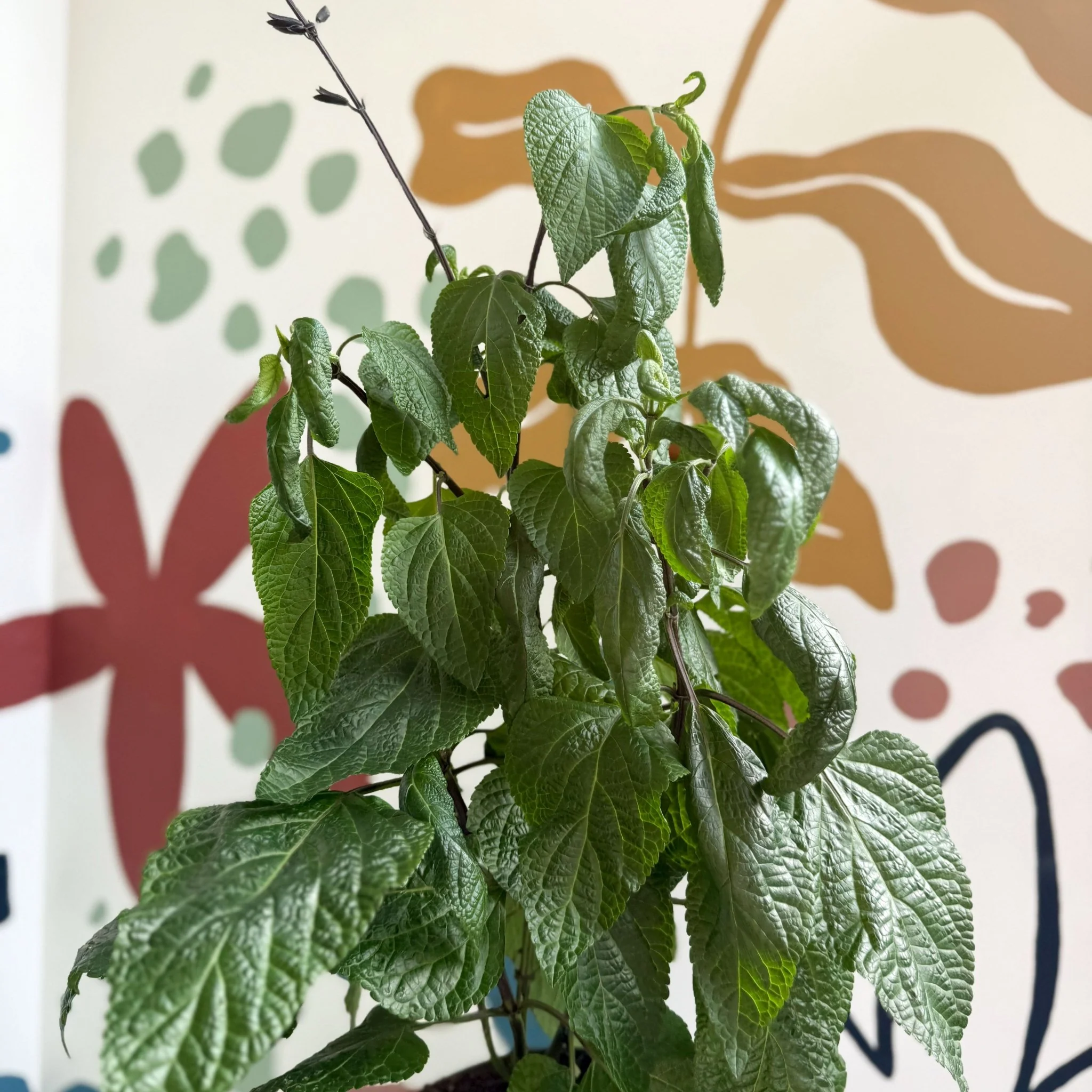
Salvia guaranitica 'Black and Bloom'
Salvia guaranitica 'Black and Bloom'
With dramatic black stems and vivid deep blue flowers, Salvia guaranitica ‘Black and Bloom’ is a bold, pollinator-friendly perennial that brings tropical flair to borders and large containers. It blooms from midsummer right into autumn, thriving in full sun and attracting bees, butterflies, and hummingbird hawk-moths. Larger and hardier than many similar salvias, this variety adds height and movement to sunny planting schemes.
Salvia guaranitica ‘Black and Bloom’, commonly known as Anise Sage or Blue Anise Sage, is loved for its showy blooms, striking colour contrast, and long flowering season.
|
Perennial |
Clump-forming, Upright, Deciduous in cold winters |
Flowers: July – October Foliage: May – October (dies back after frost) |
Scientific Name
Salvia guaranitica ‘Black and Bloom’ (cultivar of a South American species; guaranitica refers to the Guaraní people of the plant’s native region)
Synonyms
Blue Anise Sage, Black and Bloom Salvia
Common Name
Anise Sage
Origin
Species native to Brazil, Paraguay, Uruguay, and Argentina; this cultivar bred for improved hardiness and stem colour
Pruning Tips
Cut back dead stems in spring once new growth appears. Can be trimmed lightly in summer to shape or reduce height
Wildlife Value
Excellent – rich nectar source for bees, butterflies, and especially hummingbird hawk-moths
Positioning
Full sun in a sheltered position; suitable for borders, wildlife gardens, and large pots
Water
Water well during dry periods, especially in the first season or when grown in containers
Soil
Fertile, well-drained soil; avoid heavy, waterlogged areas in winter
Food
Feed monthly during the growing season with a high-potash liquid fertiliser to encourage flowering
Pet-safe
Generally considered non-toxic to pets
Sprouts Top Tips
Mulch around the base in autumn to help protect roots from frost. In colder areas, consider lifting and overwintering in a cool, frost-free place or treat as an annual.
Original: $16.11
-65%$16.11
$5.64Product Information
Product Information
Shipping & Returns
Shipping & Returns
Description
With dramatic black stems and vivid deep blue flowers, Salvia guaranitica ‘Black and Bloom’ is a bold, pollinator-friendly perennial that brings tropical flair to borders and large containers. It blooms from midsummer right into autumn, thriving in full sun and attracting bees, butterflies, and hummingbird hawk-moths. Larger and hardier than many similar salvias, this variety adds height and movement to sunny planting schemes.
Salvia guaranitica ‘Black and Bloom’, commonly known as Anise Sage or Blue Anise Sage, is loved for its showy blooms, striking colour contrast, and long flowering season.
|
Perennial |
Clump-forming, Upright, Deciduous in cold winters |
Flowers: July – October Foliage: May – October (dies back after frost) |
Scientific Name
Salvia guaranitica ‘Black and Bloom’ (cultivar of a South American species; guaranitica refers to the Guaraní people of the plant’s native region)
Synonyms
Blue Anise Sage, Black and Bloom Salvia
Common Name
Anise Sage
Origin
Species native to Brazil, Paraguay, Uruguay, and Argentina; this cultivar bred for improved hardiness and stem colour
Pruning Tips
Cut back dead stems in spring once new growth appears. Can be trimmed lightly in summer to shape or reduce height
Wildlife Value
Excellent – rich nectar source for bees, butterflies, and especially hummingbird hawk-moths
Positioning
Full sun in a sheltered position; suitable for borders, wildlife gardens, and large pots
Water
Water well during dry periods, especially in the first season or when grown in containers
Soil
Fertile, well-drained soil; avoid heavy, waterlogged areas in winter
Food
Feed monthly during the growing season with a high-potash liquid fertiliser to encourage flowering
Pet-safe
Generally considered non-toxic to pets
Sprouts Top Tips
Mulch around the base in autumn to help protect roots from frost. In colder areas, consider lifting and overwintering in a cool, frost-free place or treat as an annual.