Philodendron ‘Sunlight’
A self-heading Philodendron known for its striking new foliage that emerges in warm red tones before maturing to deep glossy green. Compact and upright in form, Philodendron ‘Sunlight’ is a statement piece for any bright interior, combining easy care with eye-catching colour. Though its exact origins are unclear, it’s a modern cultivar likely derived from tropical Philodendron species native to Central and South America.
Scientific Name
Philodendron ‘Sunlight’ (genus meaning: ‘lover of trees’)
This plant appears to be a horticultural hybrid or unregistered cultivar within the Philodendron genus. It is currently sold under the trade name Philodendron ‘Sunlight’, though no official cultivar registration or documented parentage exists.
Common Name(s)
Philodendron ‘Sunlight’, Red New-Leaf Philodendron
Origin
Believed to be derived from tropical Philodendron species native to Central and South America.
Light
Prefers bright, indirect light to maintain strong colour contrast between new and mature leaves. Avoid direct midday sun, which can scorch foliage. A few hours of soft morning or late afternoon sun can enhance the plant’s natural sheen.
Water
Allow the top inch of soil to dry between waterings. In winter, reduce watering frequency as growth slows. Always ensure the pot drains freely – this plant dislikes sitting in waterlogged soil.
Humidity
Enjoys moderate to high humidity. Ideal for rooms like kitchens or bathrooms, or use a pebble tray or humidifier nearby. Regular misting will help keep leaves glossy and vibrant.
Soil
Plant in a well-draining aroid mix that retains some moisture but doesn’t stay soggy – a combination of peat-free compost, bark, and perlite works well. Repot every 2–3 years in spring to refresh the soil and support root growth.
Food
Feed monthly during spring and summer, or every 3–4 waters, with a balanced liquid houseplant fertiliser. Pause feeding in autumn and winter.
Temperature
Thrives in normal household temperatures between 18–27°C. Avoid temperatures below 15°C and protect from cold draughts.
Pet-safe
Toxic if ingested – keep away from pets and children.
Sprouts Top Tips
To keep growth even and full, rotate the plant regularly so it receives light on all sides. The newest leaves will emerge brightest when the plant is getting just the right amount of light – slightly less light results in greener, less vivid new growth.
Extras
As a self-heading Philodendron, ‘Sunlight’ will naturally maintain a tidy, upright form without needing a moss pole or climbing support.
Did You Know?
The name Philodendron comes from the Greek philo (love) and dendron (tree) – a nod to the way many species climb trees in their native rainforest habitats.
Product Information
Product Information
Shipping & Returns
Shipping & Returns


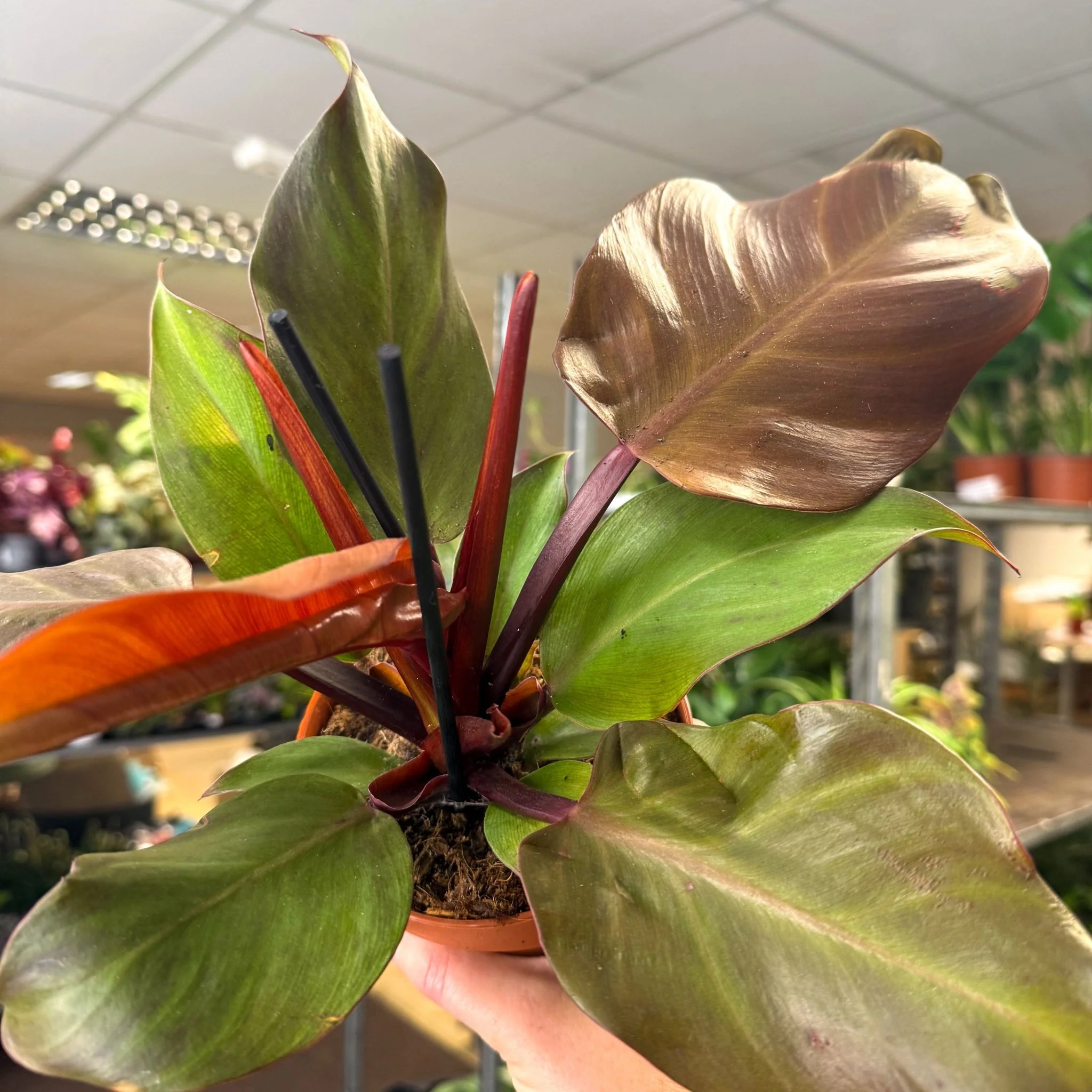


Philodendron ‘Sunlight’
Philodendron ‘Sunlight’
A self-heading Philodendron known for its striking new foliage that emerges in warm red tones before maturing to deep glossy green. Compact and upright in form, Philodendron ‘Sunlight’ is a statement piece for any bright interior, combining easy care with eye-catching colour. Though its exact origins are unclear, it’s a modern cultivar likely derived from tropical Philodendron species native to Central and South America.
Scientific Name
Philodendron ‘Sunlight’ (genus meaning: ‘lover of trees’)
This plant appears to be a horticultural hybrid or unregistered cultivar within the Philodendron genus. It is currently sold under the trade name Philodendron ‘Sunlight’, though no official cultivar registration or documented parentage exists.
Common Name(s)
Philodendron ‘Sunlight’, Red New-Leaf Philodendron
Origin
Believed to be derived from tropical Philodendron species native to Central and South America.
Light
Prefers bright, indirect light to maintain strong colour contrast between new and mature leaves. Avoid direct midday sun, which can scorch foliage. A few hours of soft morning or late afternoon sun can enhance the plant’s natural sheen.
Water
Allow the top inch of soil to dry between waterings. In winter, reduce watering frequency as growth slows. Always ensure the pot drains freely – this plant dislikes sitting in waterlogged soil.
Humidity
Enjoys moderate to high humidity. Ideal for rooms like kitchens or bathrooms, or use a pebble tray or humidifier nearby. Regular misting will help keep leaves glossy and vibrant.
Soil
Plant in a well-draining aroid mix that retains some moisture but doesn’t stay soggy – a combination of peat-free compost, bark, and perlite works well. Repot every 2–3 years in spring to refresh the soil and support root growth.
Food
Feed monthly during spring and summer, or every 3–4 waters, with a balanced liquid houseplant fertiliser. Pause feeding in autumn and winter.
Temperature
Thrives in normal household temperatures between 18–27°C. Avoid temperatures below 15°C and protect from cold draughts.
Pet-safe
Toxic if ingested – keep away from pets and children.
Sprouts Top Tips
To keep growth even and full, rotate the plant regularly so it receives light on all sides. The newest leaves will emerge brightest when the plant is getting just the right amount of light – slightly less light results in greener, less vivid new growth.
Extras
As a self-heading Philodendron, ‘Sunlight’ will naturally maintain a tidy, upright form without needing a moss pole or climbing support.
Did You Know?
The name Philodendron comes from the Greek philo (love) and dendron (tree) – a nod to the way many species climb trees in their native rainforest habitats.
Original: $21.48
-65%$21.48
$7.52Product Information
Product Information
Shipping & Returns
Shipping & Returns
Description
A self-heading Philodendron known for its striking new foliage that emerges in warm red tones before maturing to deep glossy green. Compact and upright in form, Philodendron ‘Sunlight’ is a statement piece for any bright interior, combining easy care with eye-catching colour. Though its exact origins are unclear, it’s a modern cultivar likely derived from tropical Philodendron species native to Central and South America.
Scientific Name
Philodendron ‘Sunlight’ (genus meaning: ‘lover of trees’)
This plant appears to be a horticultural hybrid or unregistered cultivar within the Philodendron genus. It is currently sold under the trade name Philodendron ‘Sunlight’, though no official cultivar registration or documented parentage exists.
Common Name(s)
Philodendron ‘Sunlight’, Red New-Leaf Philodendron
Origin
Believed to be derived from tropical Philodendron species native to Central and South America.
Light
Prefers bright, indirect light to maintain strong colour contrast between new and mature leaves. Avoid direct midday sun, which can scorch foliage. A few hours of soft morning or late afternoon sun can enhance the plant’s natural sheen.
Water
Allow the top inch of soil to dry between waterings. In winter, reduce watering frequency as growth slows. Always ensure the pot drains freely – this plant dislikes sitting in waterlogged soil.
Humidity
Enjoys moderate to high humidity. Ideal for rooms like kitchens or bathrooms, or use a pebble tray or humidifier nearby. Regular misting will help keep leaves glossy and vibrant.
Soil
Plant in a well-draining aroid mix that retains some moisture but doesn’t stay soggy – a combination of peat-free compost, bark, and perlite works well. Repot every 2–3 years in spring to refresh the soil and support root growth.
Food
Feed monthly during spring and summer, or every 3–4 waters, with a balanced liquid houseplant fertiliser. Pause feeding in autumn and winter.
Temperature
Thrives in normal household temperatures between 18–27°C. Avoid temperatures below 15°C and protect from cold draughts.
Pet-safe
Toxic if ingested – keep away from pets and children.
Sprouts Top Tips
To keep growth even and full, rotate the plant regularly so it receives light on all sides. The newest leaves will emerge brightest when the plant is getting just the right amount of light – slightly less light results in greener, less vivid new growth.
Extras
As a self-heading Philodendron, ‘Sunlight’ will naturally maintain a tidy, upright form without needing a moss pole or climbing support.
Did You Know?
The name Philodendron comes from the Greek philo (love) and dendron (tree) – a nod to the way many species climb trees in their native rainforest habitats.


